
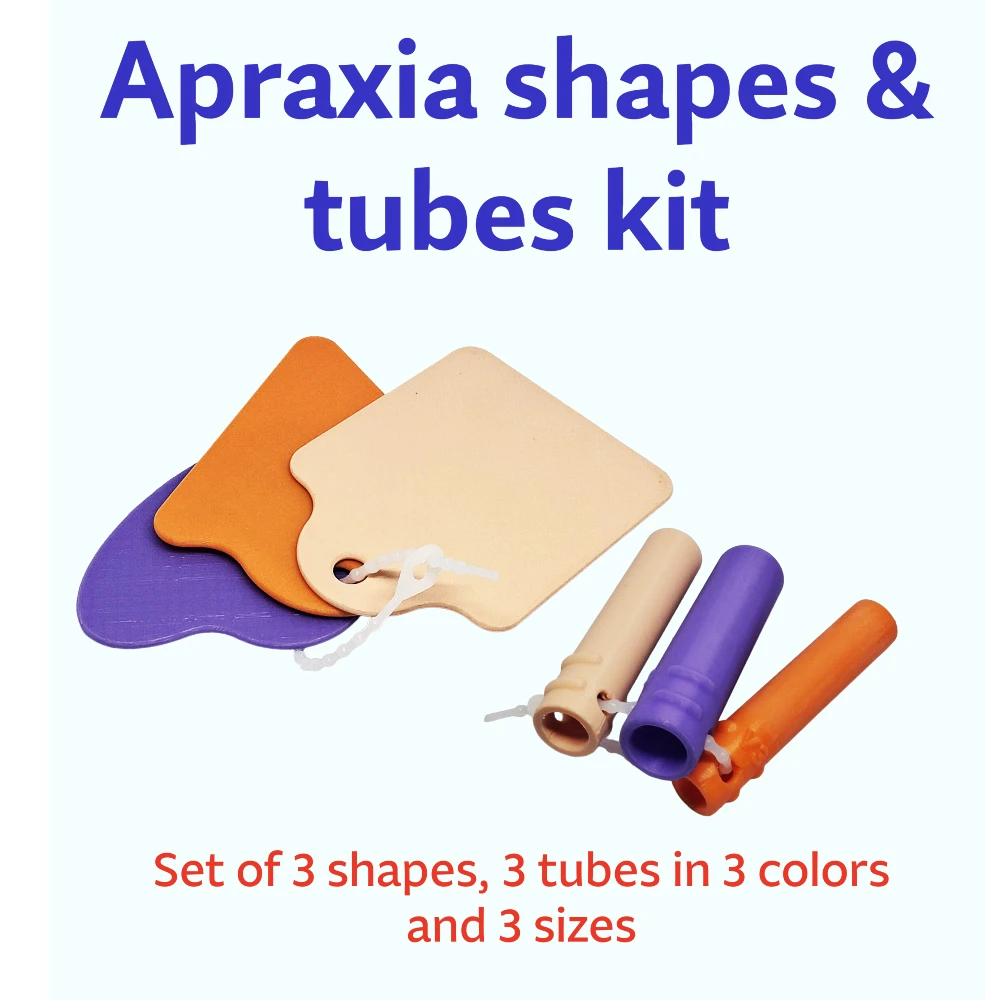
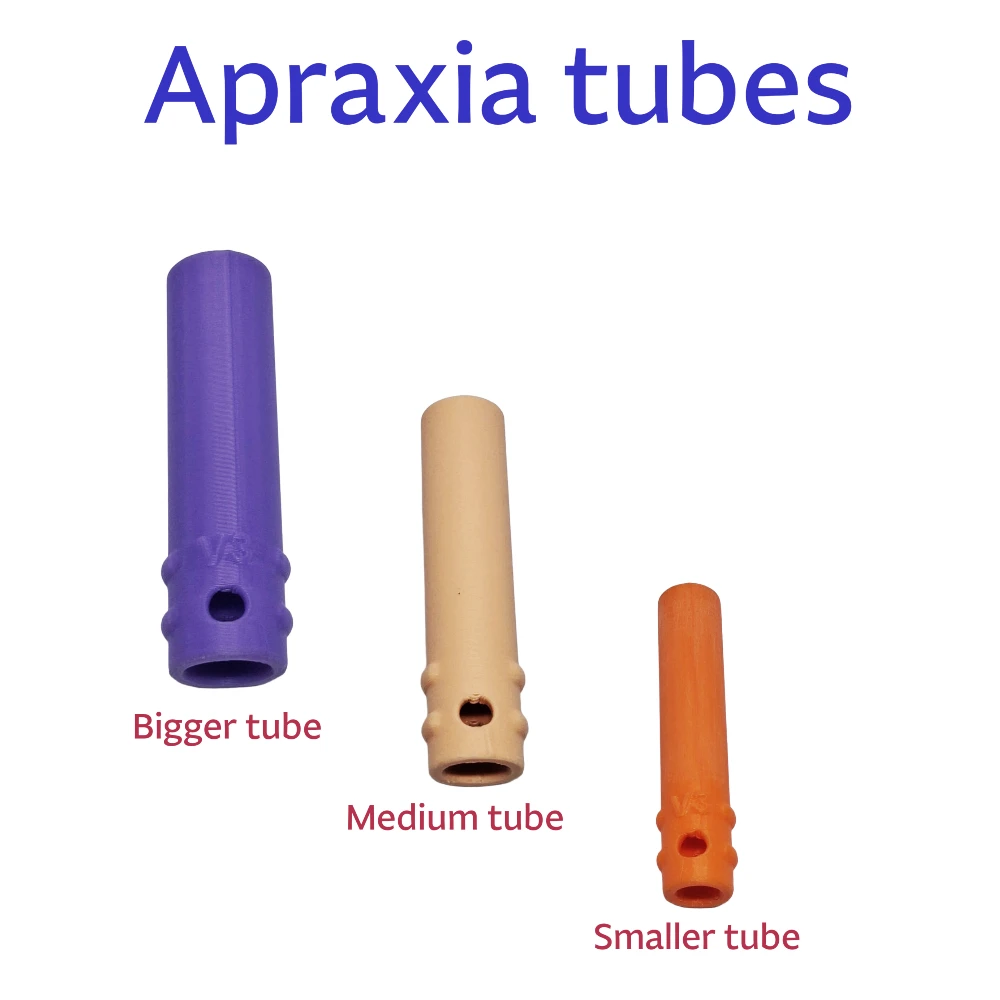
Apraxia Shapes and tubes kit
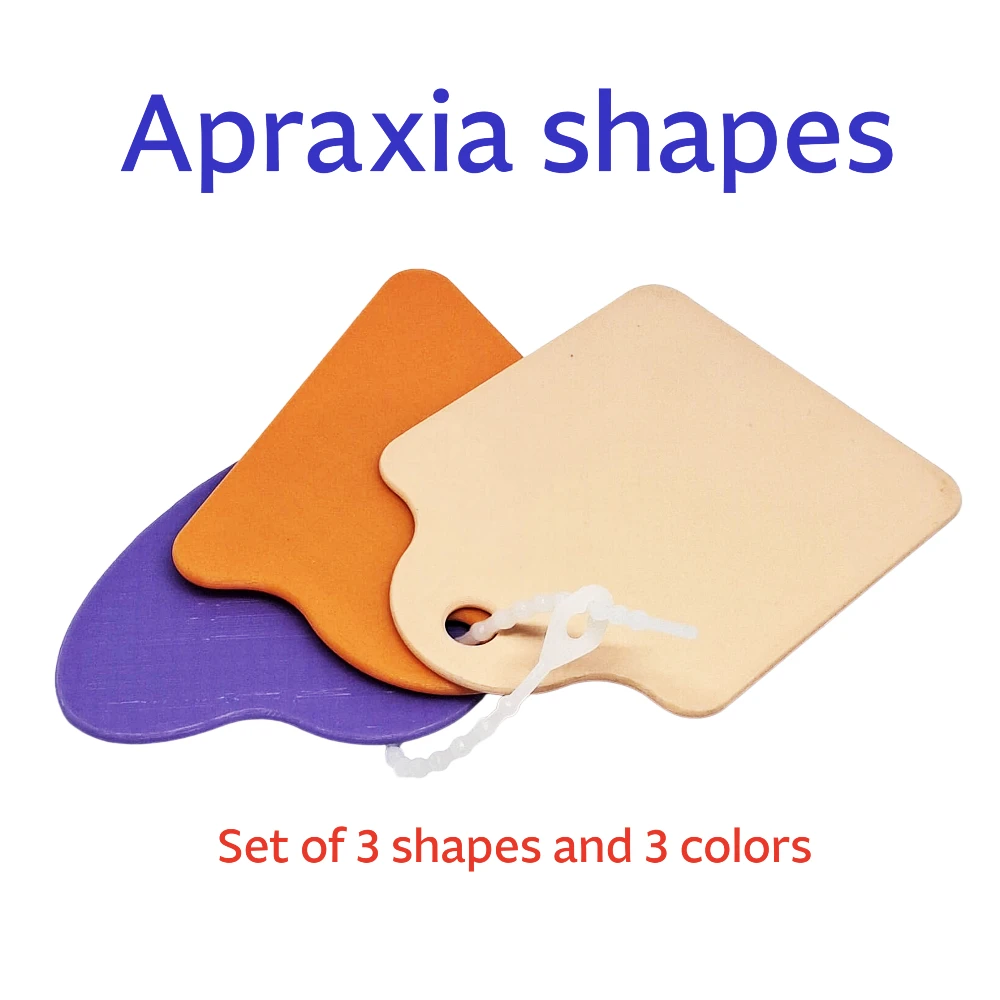
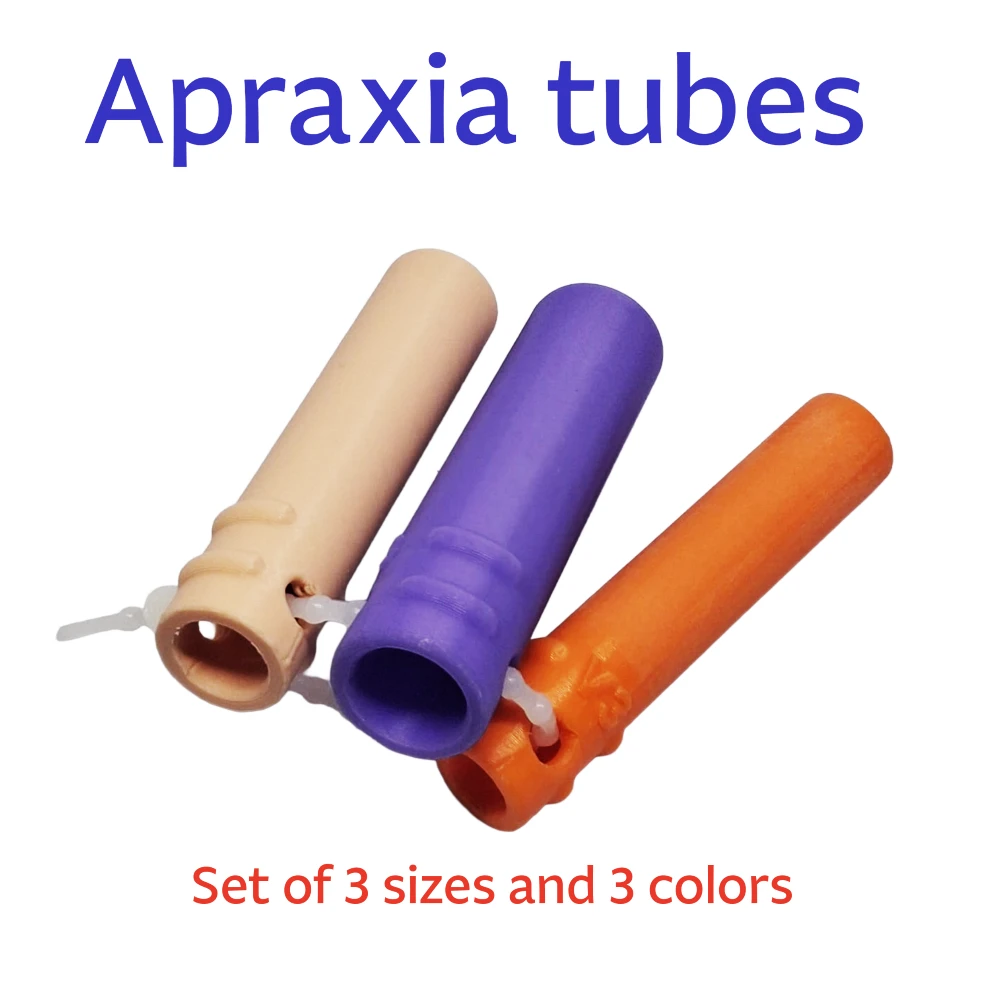
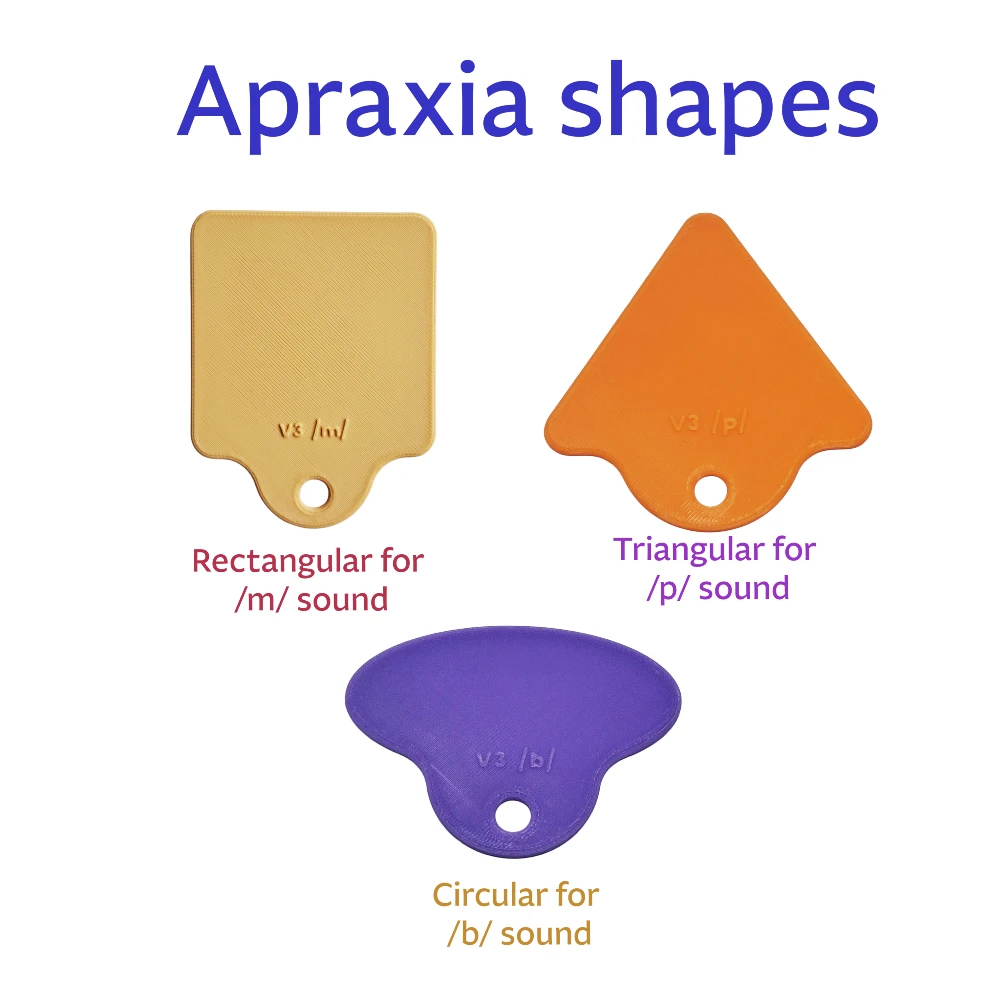
The kit comes with 3 shapes and 3 tubes for bilabial sounds like /m/ /b/ /p/. The material use is food grade material.
Apraxia Tubes from V3 Talk Tools are made using food-grade material, selected with attention to safety and suitability for oral use. The smooth, durable design supports repeated use in therapy and supervised home practice. The tools should be cleaned only with Lukewarm water and wipe it dry before storing it appropriately.
Benefits for speech production
When appropriately selected and used as part of an individualised therapy programme, the shapes and tubes may help to:
- Provide tactile cues for correct lip and oral placement.
- Support awareness of the movements involved in speech production.
- Facilitate practice of selected bilabial and vowel sounds.
- Encourage improved coordination of the lips, jaw, and tongue.
- Support motor planning and movement sequencing.
- Help bridge the transition from guided oral movements to actual speech sounds.
- Reinforce learning through combined tactile, visual, and verbal feedback.
- Make therapy more structured, interactive, and engaging.
- Encourage repeated practice of targeted movement patterns in a controlled manner.
V3 Talk Tools is pleased to introduce Apraxia Shapes and Tubes—specialised therapy tools designed to support children and individuals who experience difficulty planning, coordinating, and producing speech movements.
Speech production requires precise coordination of the lips, jaw, tongue, breath, and voice. For individuals with apraxia of speech, knowing what they want to say may not be enough; the brain may have difficulty planning and sequencing the movements needed to produce clear speech. Apraxia Shapes and Tubes provide tactile, visual, and sensory cues that can help make these movements easier to understand and practise under the guidance of a qualified speech-language pathologist.
Use under professional guidance
Every individual with apraxia has different strengths and
challenges. Therefore, these tools should be introduced and used under the
direction of a qualified speech-language pathologist or other appropriately
trained professional.